




What is PTT Over Cellular Radio?
Conventional radio systems normally have one or more radio channels assigned to them to operate on. These channels are often assigned by government bodies to each user, and a licence fee is often charged. Range of these conventional systems is often limited to a few km or tens of km unless expensive infrastructure is installed with multiple radio sites and high equipment costs.
Although there is still a place for these conventional radio systems, the new PTT over cellular technology can offer a real alternative to conventional radio with virtually no limit to range and very low hardware and running costs.
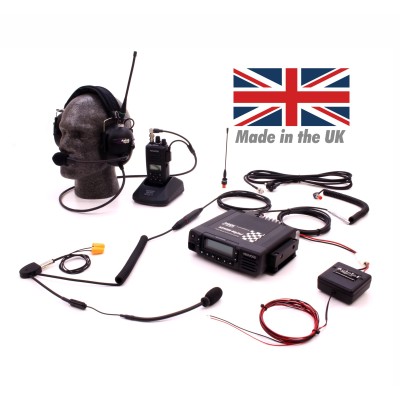
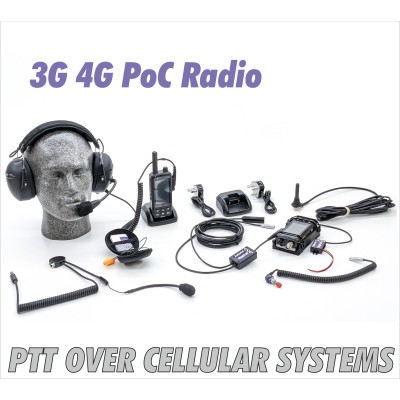
PTT over cellular stands for Push-to-Talk over Cellular, sometimes abbreviated to PoC or referred to as Network Radio. These radio units often look the same as a conventional radio, but utilize the GSM mobile phone network as a relay station to relay calls from a few meters up to hundreds, or even thousands, of kilometers.
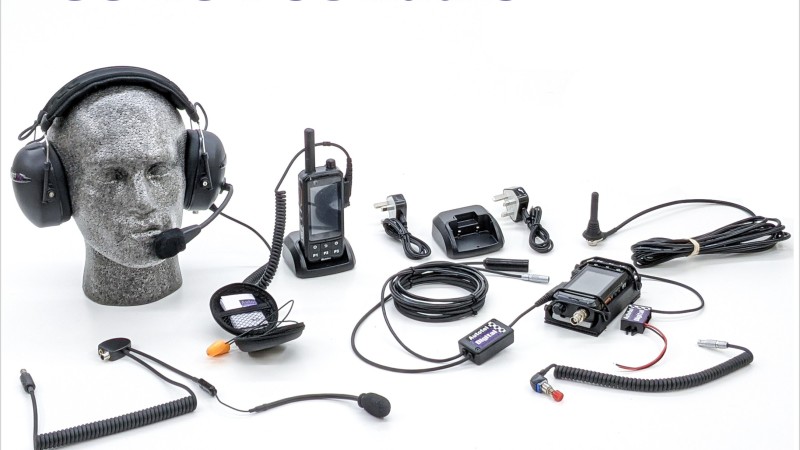
A PoC handset or car-mount radio is effectively a mobile data device. Devices come in many forms, but essentially they have a SIM card inside and connect to one of the mobile network operators to provide the service. For a PoC device to work, it must have three things:
- A GSM (ideally 3G, 4G, or 5G) mobile phone network.
- A SIM card to send data over that network (or a multi-network roaming SIM card).
- A PoC server that relays the calls.
Factors to Consider When Choosing Conventional Radio or PoC
Conventional Radio
Advantages
- Network Independence: Total independence from any cellular network, so it will work regardless of location.
- Low Running Costs: Running costs are low when used within a single country.
- Low Latency: Fast connection time and minimal delay in voice traffic.
Disadvantages
- Limited Range: Range of a basic system can be limited to a few kilometers, so full track coverage cannot be guaranteed unless a repeater booster is used.
- Expensive Repeaters: Repeater boosters are expensive and need to be reconfigured if you have to change radio channels (typically when traveling abroad).
- Licensing Requirements: A radio licence is required for each country the system is used in, which can be expensive and time-consuming to obtain internationally.
- Condensed Channels: The radio channels used for digital radio are extremely condensed, presenting problems in getting clear communications in very noisy environments.
- Interference: Interference from other radio users can be a major issue, potentially resulting in missed calls.
PoC (Push-to-Talk over Cellular)
Advantages
- Extended Range: Greater range than conventional radio, as long as there is good mobile network coverage.
- Superior Audio: Clearer speech with high-quality audio that tolerates high noise environments better.
- Multi-Channel Monitoring: Greater flexibility for multi-car teams; users are able to monitor multiple channels without the need for channel scanning.
- Role & Priority Management: Users can be assigned specific roles (e.g., engineer, crew, car, manager, or listen-only). Each role can be granted access to different channels and assigned priority levels, allowing high-priority users to override low-priority calls.
- Over-the-Air Configuration: System configuration via a web portal allows live reconfiguration and over-the-air programming for each user.
Disadvantages
- Latency: PoC calls have a short delay from when the user speaks to when it is heard by other team members. Typically, this latency is around 500 milliseconds and is not noticeable during on-track conversations.
- Network Dependency: PoC relies on good 4G or 5G network coverage. At race tracks, this is normally not an issue when using roaming SIM cards that switch networks if one is unavailable.
- Congestion Delays: If the network used is extremely congested, latency times may increase, though this is very rare.

1 Comment(s)
Yes PoC is really cool, I tried it once for track day and the range is insane, like you can talk to someone way far away no problem, audio also much clearer than old radios, only thing is gotta make sure network is good.
Conventional radios still nice if you just race locally, no network needed and super fast connect, but man paying for licences and boosters everywhere is pain.
I’d go PoC if you travel tracks a lot, conventional only if staying local.
Leave a comment